
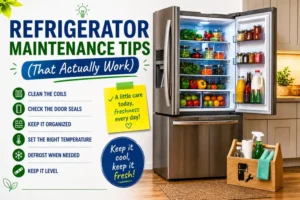
Do you want your fridge to work properly for a long time? Fridge maintenance is essential if you want your fridge to work for a long time. Regular maintenance not only prevents costly repairs but also ensures your food stays fresh for longer. It is important for efficient cooling and long-term durability. A poorly maintained fridge can increase electricity bills by 15–25%, and many homeowners don’t realize this. Follow these refrigerator maintenance checklists and care.
How Does a Refrigerator Work? (Understanding Before Maintenance)
To maintain a refrigerator properly, it’s important to understand its basic working system:
- The compressor circulates refrigerant gas
- The condenser coils release heat
- The evaporator coils absorb heat from inside
- The thermostat regulates temperature
If any of these components are blocked, dirty, or inefficient, the entire system becomes stressed.
Refrigerator Maintenance Tips (That Actually Work)
1. Clean the Back Coils Every Few Months
Clean the condenser coils to maintain cooling efficiency.
Condenser coils release heat from the refrigerator. When dust accumulates, heat transfer becomes inefficient.
Maintenance steps:
- Unplug refrigerator
- Locate coils (back or bottom)
- Use a soft brush or vacuum
- Clean every 3–6 months
Why it matters:
Dirty coils force the compressor to work harder, increasing electricity usage and wear.
If you don’t clean the coil, it will result in
- Reduces cooling efficiency
- Makes the compressor work harder
- Increases power consumption
But you should be careful when cleaning the coils of your refrigerator. When you clean the coil, make sure you do not apply any cleaning solution to it. Simply use a coil brush to remove dirt from the coil.
2. Keep the Right Temperature
Maintain the optimal temperature settings for efficiency.
Incorrect temperature settings directly affect energy consumption and food safety.
Ideal temperature range:
- Refrigerator: 3°C to 5°C
- Freezer: -18°C
Tip: Avoid frequent temperature changes as they destabilize cooling cycles.
Many people set temperatures randomly. If the temperature is too cold, it is a waste of electricity, and too warm a temperature results in food spoilage
3. Ensure proper air circulation
Don’t overfill or leave it empty. Ensure proper air circulation inside the fridge. Airflow is essential for uniform cooling. The fridge contains a few items we’ve completely forgotten about. So, it is necessary to throw out unwanted and aged food items every 1 to 2 days. It prevents molds and foul odor inside the refrigerator. Avoid overloading the refrigerator, as this can block airflow.
Best practices:
- Do not block air vents
- Avoid overpacking shelves
- Leave space between food items
- Store hot food only after cooling
Poor airflow causes uneven cooling and frost buildup.
Balance matters.
- Overloaded fridge → blocks airflow
- Empty fridge → loses cooling stability
Keep it around 70% full for best performance
4. Check Door Rubber (Seal)
Door seals ensure cold air stays inside the refrigerator.
Common issue: Weak seals cause cold air leakage.
Simple test:
Place a paper between the door and close it
If it slips easily, the seal may be damaged
Fix:
Clean seals with mild soap
Replace if cracked or loose
A loose seal is like leaving the door slightly open all day, resulting in a loss of cooling.
5. Defrost When Needed In Freezer Compartments
Defrost regularly if your fridge is not frost-free and ice buildup exceeds 6mm. Turn off the refrigerator. Remove food, and let the ice melt naturally. This may take time, so you can use warm water or salt to speed up the process. Don’t use a sharp knife or a fork. After defrosting, wipe down surfaces to prevent moisture accumulation, which can lead to mold and odors.
Excess frost reduces storage space and cooling efficiency.
Prevention tips:
- Avoid frequent door opening
- Do not store warm food
- Defrost when the ice exceeds 6mm
For older or manual models:
Ice buildup reduces cooling. So you can buy a “No Frost Refrigerator.”
6. Clean the Interior Regularly to Maintain Hygiene
Food spills and moisture can lead to bacteria, mold, and odors.
Deep cleaning process:
- Empty the refrigerator completely
- Remove shelves and drawers
- Clean with baking soda + warm water
- Dry completely before restocking
Recommended frequency:
Every 3–4 weeks for hygiene safety.
Stabilize Voltage Supply to Protect Compressor
Voltage fluctuations can damage internal components.
Protection methods:
Use a voltage stabilizer
Avoid a direct unstable power connection
Use surge protectors in high-risk areas
7. Avoid Overloading or Underloading the Refrigerator
Both extremes affect efficiency:
Overloading blocks the airflow
Underloading reduces thermal stability
Best practice: Maintain moderate, organized storage.
8. Place Your Fridge Smartly in a Proper Location
Location plays a major role in performance.
Ideal placement:
- Away from direct sunlight
- At least a 2–4 inch gap from walls
- Away from ovens or heat sources
Ventilation matters. Poor ventilation increases compressor workload.
Place the fridge on a stable, elevated surface, ensuring there is enough space at the back for proper airflow so the compressor fan can work efficiently. This allows the refrigerant to release heat.
Avoid placing near:
- Stove
- Direct sunlight
9. Stabilize Voltage Supply to Protect Compressor
Voltage fluctuations can damage internal components.
Protection methods:
- Use a voltage stabilizer
- Avoid a direct unstable power connection
- Use surge protectors in high-risk areas
10. Inspect the Drainage System to Prevent Leakage
Blocked drainage causes water accumulation inside the fridge.
Maintenance tip:
- Check the drain hole periodically
- Clean with warm water or a thin wire
- Ensure smooth water flow
Additional advice
This is not a maintenance tip, but advice for your convenience.
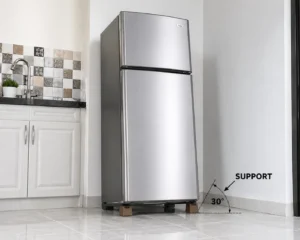
Place the fridge tilted: Place the fridge tilted by giving some support at the bottom so that the fridge door closes automatically after you open it. So there is no need to close the door every time you open.
Why Is Refrigerator Maintenance Important?
Refrigerator maintenance refers to the regular cleaning, inspection, and upkeep of internal and external components to ensure optimal cooling performance and energy efficiency.
Proper maintenance helps:
- Maintain stable cooling temperatures
- Reduce electricity consumption
- Prevent food spoilage and bacterial growth
- Avoid compressor overload
- Reduce repair frequency and cost
A neglected refrigerator can lose efficiency by 20–40% over time, leading to higher electricity bills and poor cooling performance.
How Often Should You Maintain a Refrigerator?
A structured maintenance schedule improves performance:
Weekly: Clean spills, organize items
Monthly: Interior cleaning and odor control
Every 3–6 months: Coil cleaning + seal inspection
Annually: Full professional servicing
Why Do Refrigerators Become Less Efficient Over Time?
Common reasons include:
- Dust accumulation on coils
- Weak door seals
- Poor ventilation
- Overloading
- Infrequent cleaning
- Compressor strain
These issues gradually reduce cooling performance and increase energy costs.
What Are the Most Common Refrigerator Problems Due to Poor Maintenance?
Neglected maintenance leads to:
- Weak or uneven cooling
- Excessive electricity consumption
- Ice buildup in the freezer
- Strange odors
- Compressor failure (costly repair)
Most of these are preventable with routine care.
How Does Proper Maintenance Improve Energy Efficiency?
A well-maintained refrigerator:
- Uses less electricity
- Maintains stable cooling cycles
- Reduces compressor workload
- Prevents heat buildup
- Operates more quietly and efficiently
Refrigerator Maintenance Tips for Hot and Humid Climates
In warmer regions like South Asia and the Middle East, refrigerators face an extra load.
Extra precautions:
- Increase coil cleaning frequency
- Avoid frequent door openings
- Keep the fridge away from sunlight
- Ensure a stable electricity supply
- Allow extra ventilation space
Hot climates increase compressor stress, making maintenance even more critical.
Old vs New Refrigerator, Real Comparison
When buying a refrigerator, most people face the same question:
Should I buy a new fridge or a used one?
The simple answer:
It depends on your budget, usage, and—most importantly—the seller you trust.
This guide goes beyond basic pros and cons. It gives you a real, experience-based comparison with practical insights that help you make the smartest decision.
New vs Used Refrigerator – Real Difference
| Factor | New Refrigerator | Used Refrigerator |
|---|---|---|
| Cost | Expensive upfront | Much more affordable |
| Value Over Time | Depreciates quickly | Already depreciated |
| Features | Latest technology | Basic or older features |
| Risk | Low (with warranty) | Depends on seller |
| Performance | Expected to be perfect | Must be tested |
| Best For | Long-term use | Short-term or budget use |
New Refrigerator
Why People Prefer New Fridges
1. Latest Technology & Smart Features
New refrigerators come with inverter compressors, energy-saving modes, fast cooling, and modern designs. These features improve efficiency and convenience.
2. Lower Electricity Consumption
If you’re planning long-term use, a new energy-efficient refrigerator can save money on electricity bills over time.
3. Full Manufacturer Warranty
You get peace of mind with official warranty coverage, especially for the compressor.
4. Zero Usage History
No hidden issues, no prior repairs—everything is fresh and unused.
Hidden Downsides of New Refrigerators
1. High Initial Cost
You pay a large amount upfront, which may not be practical for everyone.
2. Fast Depreciation
The moment you buy it, its resale value drops. Within months, newer models enter the market.
3. Early Manufacturing Faults (Yes, It Happens)
Not all new fridges are perfect. Some develop issues shortly after purchase—and if there’s no return policy, you’re stuck.
Used Refrigerator
Why Smart Buyers Choose Used
1. Budget-Friendly Option
Used refrigerators can cost half or even less than new ones. Perfect for students, small families, or temporary setups.
2. Better Size & Brand in Same Budget
Instead of a small new fridge, you can get a larger, higher-quality branded model in used condition.
3. Eco-Friendly Choice
Reusing appliances reduces waste and supports sustainability.
4. Already Tested in Real Life
A properly checked used fridge has already proven it can run without issues.
Risks of Buying Used Refrigerators
1. Seller Matters More Than Product
Buying from random sellers or online marketplaces increases the risk of hidden problems.
2. Limited Warranty
Most used fridges come with short-term checking warranties or none at all.
3. Slightly Higher Power Consumption
Older models may consume more electricity compared to new inverter fridges.
Real Story from Our Store
A customer recently came to us after buying a cheap fridge from an online marketplace. His budget was low.
Problem: He can buy a small-sized new fridge, but a new fridge has some problems, like a cooling issue after 10 days, and no return option.
He purchased a tested second-hand fridge from us. —and it’s still running perfectly.
Lesson: It’s not about new or used
It’s about where you buy from
Price Insight (Dubai Market Reality)
From our daily sales experience:
Small fridge → budget-friendly option for singles.
Double-door → most popular for families
Large models → higher cost, but more storage
Used appliances typically save 40–60% cost compared to new ones
When Should You Replace Your Fridge?
Instead of searching for repairs again and again, check:
- Cooling is inconsistent
- The electricity bill suddenly increases
- If the compressor is burnt
- Frequent breakdowns
- Loud noise from the compressor
- If the repair costs become too frequent, replacement is smarter
Buying Advice (From Experts)
- When choosing a fridge:
- Think about your family size
- Measure your kitchen space
- Check energy efficiency
- Always inspect before buying
- For used appliances:
- Buy only from trusted sellers
- Ask about the testing process
What is the best place to buy a fridge in Dubai?
There are many of the best places to buy a fridge in Dubai, but SMN Used Appliances stands out as a trusted retailer for fridges and freezers in Dubai and across the UAE due to its
- Secure Shopping
- Fast Shipping
- Online order facility
- Good Quality
- Competitive pricing
- Wide product selection
- Best deals
- Best price
We offer fridge-freezers, single-door fridges, 2-door fridges, mini fridges, and large fridges, all featuring innovative cooling technologies.
Why People Choose SMN Used Appliances
We focus on trust and transparency.
Every appliance is tested
- Cheap and market-competitive pricing
- Clear pricing
- Located in Al Quoz
- Wide variety available. We have these brands available
- Siemens
- Bosch
- Miele
- LG
- Samsung
- Smeg
Customers prefer us because they avoid the risks of random sellers
Final Thoughts
A refrigerator is a long-term investment. Whether you choose a new or used one, what matters most is:
Proper maintenance
Smart buying decision
At SMN Used Appliances, we help customers find reliable appliances without overspending.
Call to Action
Looking for a reliable refrigerator in Dubai?
Visit us in Al Quoz
WhatsApp: 0526278100
Get expert advice + best deals today
FAQs
Is buying a used fridge safe?
Yes—if it’s tested and purchased from a reliable seller. Used refrigerators are reliable. Reliability depends more on inspection than age.
How long does a fridge last?
Usually 8–15 years, depending on maintenance.
Which fridge is best for small homes?
A compact or small fridge is ideal.
Do new refrigerators have problems?
Yes, some new units may have manufacturing defects. Always check warranty and return policies before buying.
Can Regular Maintenance Extend Refrigerator Lifespan?
Yes—significantly.
With proper care:
- Lifespan increases to 10–15+ years
- Repair frequency decreases
- Cooling performance remains stableEnergy efficiency is maintained
Neglect can reduce lifespan by several years.